Demographic Trends Affecting Game Preferences in Cross-Device Casino Platforms
Written by Sam Coleman · Nov 25, 2026
Demographic Trends Affecting Game Preferences in Cross-Device Casino Platforms
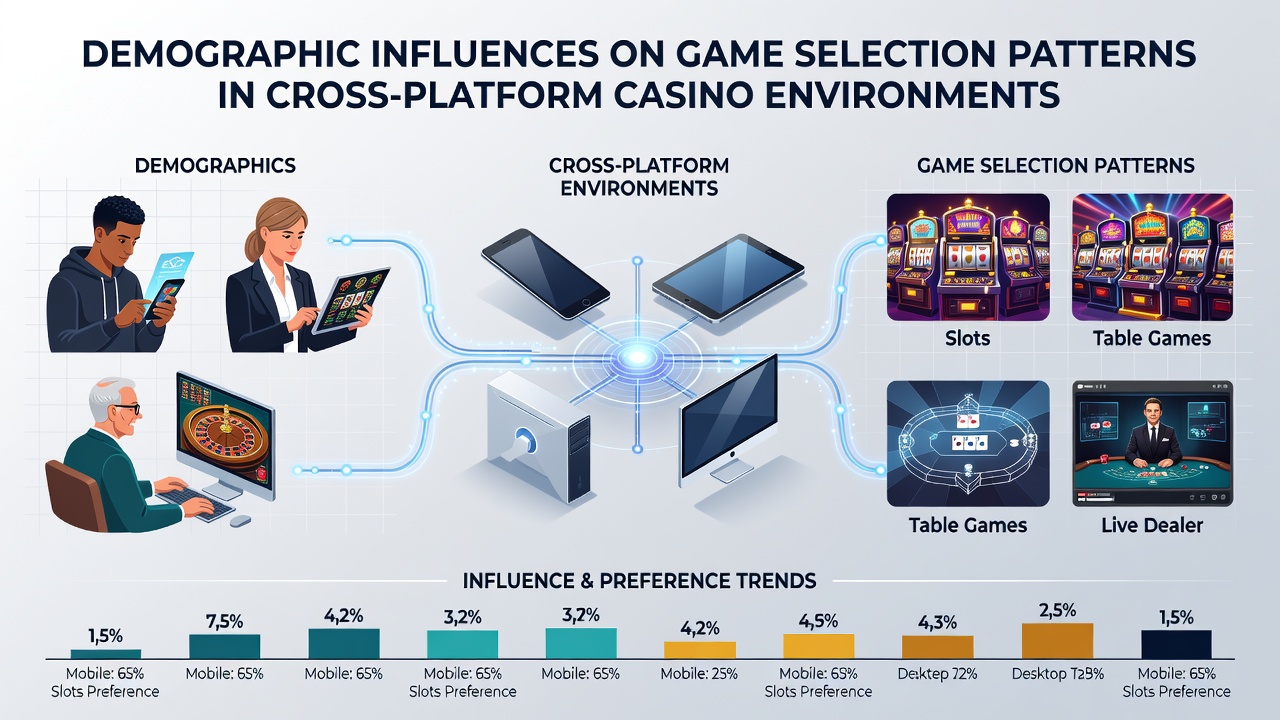
Data from multiple jurisdictions shows that age groups drive distinct patterns in game selection, with younger adults favoring high-volatility slots and live dealer options on mobile devices while older cohorts gravitate toward table games like blackjack and roulette on desktop interfaces, and researchers tracking these behaviors through 2026 note consistent splits across platforms.
Age-Based Selection Patterns
Studies tracking player activity indicate that individuals aged 18 to 34 select mobile slot titles at rates nearly double those of players over 55, and this preference holds across both regulated U.S. markets and European platforms where data aggregation occurs through licensed operators; meanwhile those in the 35 to 54 bracket demonstrate balanced engagement with both slots and video poker, often switching between devices within single sessions according to transaction logs compiled by industry analysts.
Platform analytics further reveal that users under 30 complete more frequent but smaller wagers on instant-play formats, whereas older demographics extend session lengths on strategy-driven games, and this distinction emerges clearly in aggregated reports released during November 2026 from cross-border data partnerships.
Gender and Regional Influences
Gender distributions appear in selection data as well, with male players showing higher participation in sports-adjacent casino variants and poker networks while female engagement concentrates on themed slot progressions and casual table experiences, though these trends vary by region as North American figures differ from those recorded in Australian and Canadian jurisdictions.
Geographic location compounds these effects since players in densely populated urban centers access faster mobile networks that support live dealer streams more reliably, leading to elevated selection of real-time table games, whereas rural participants lean toward offline-capable reel games that function smoothly on variable connections.

Income Levels and Platform Shifts
Income brackets correlate with device loyalty and game complexity, because higher-earning groups demonstrate stronger retention on desktop environments for high-stakes virtual table play while lower and middle income segments prioritize mobile apps offering frequent micro-transactions and bonus rounds; data compiled by the American Gaming Association illustrates these income-driven migrations across state lines in 2026.
Education levels add another layer, as users with advanced degrees select games requiring decision trees at greater frequency than those without, and platform operators adjust interface defaults accordingly to match observed behavioral clusters in their user bases.
Cross-Platform Behavioral Data
Cross-device tracking shows that demographic groups maintain core preferences even when switching platforms, yet session timing and wager sizing adapt to the interface, with mobile users across all ages completing shorter bursts while desktop sessions extend into evening hours according to patterns documented in Australian research repositories.
November 2026 updates from regulatory data-sharing agreements highlight how these habits persist despite new interface features, and operators respond by segmenting promotions along demographic lines rather than uniform campaigns.
Conclusion
Overall records confirm that demographic variables shape game selection across cross-platform casino environments through measurable patterns in age, gender, region, and income, and continued aggregation of anonymized player data supports targeted development of both mobile and desktop offerings without altering underlying preferences.