State Licensing Differences Drive Payout Timelines for Global Users in Virtual Card Table Platforms
Written by Ellis Werner · Sep 2, 2026
State Licensing Differences Drive Payout Timelines for Global Users in Virtual Card Table Platforms
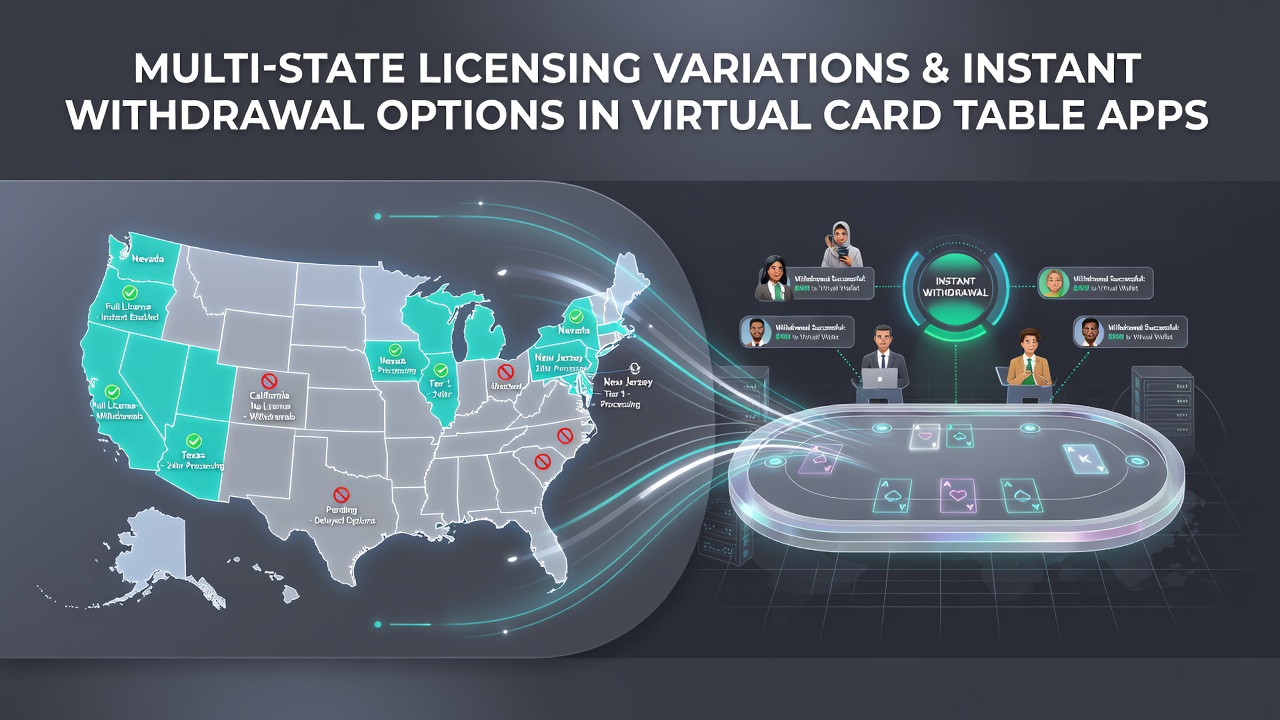
Multi-state licensing creates distinct regulatory environments that directly influence how virtual card table apps handle instant withdrawals for international users, with each jurisdiction imposing its own set of verification and payment processing rules that operators must follow. Data from September 2026 shows platforms operating across several states face staggered compliance timelines that alter cash-out speeds depending on where the license originates.
Core Regulatory Variations Across Jurisdictions
Operators secure licenses in individual states and each approval carries specific requirements for financial transaction monitoring, identity verification cycles, and approved payment channels that shape withdrawal options. States with stricter anti-money laundering protocols often mandate additional review layers before funds release, which extends processing windows even when apps advertise instant options. International users encounter these differences when their chosen platform holds primary licensing in one state while serving players from regions with separate oversight frameworks.
Platforms must align their backend systems to satisfy the most restrictive rules among active licenses, and this alignment frequently results in uniform delays applied across all user accounts regardless of location. Research indicates that states requiring real-time reporting of large transactions create bottlenecks during peak withdrawal periods, particularly when international users request payouts in non-local currencies that trigger extra currency conversion checks.
Payment Channel Restrictions and Processing Speeds
Virtual card table apps integrate e-wallets, bank transfers, and cryptocurrency options, yet state licenses determine which methods qualify for instant approval and which require manual intervention. Certain licenses prohibit direct bank linkages without prior multi-factor authentication sequences that add hours to standard withdrawal flows. International users relying on virtual cards issued outside the licensed state often face secondary verification steps not required for domestic players.
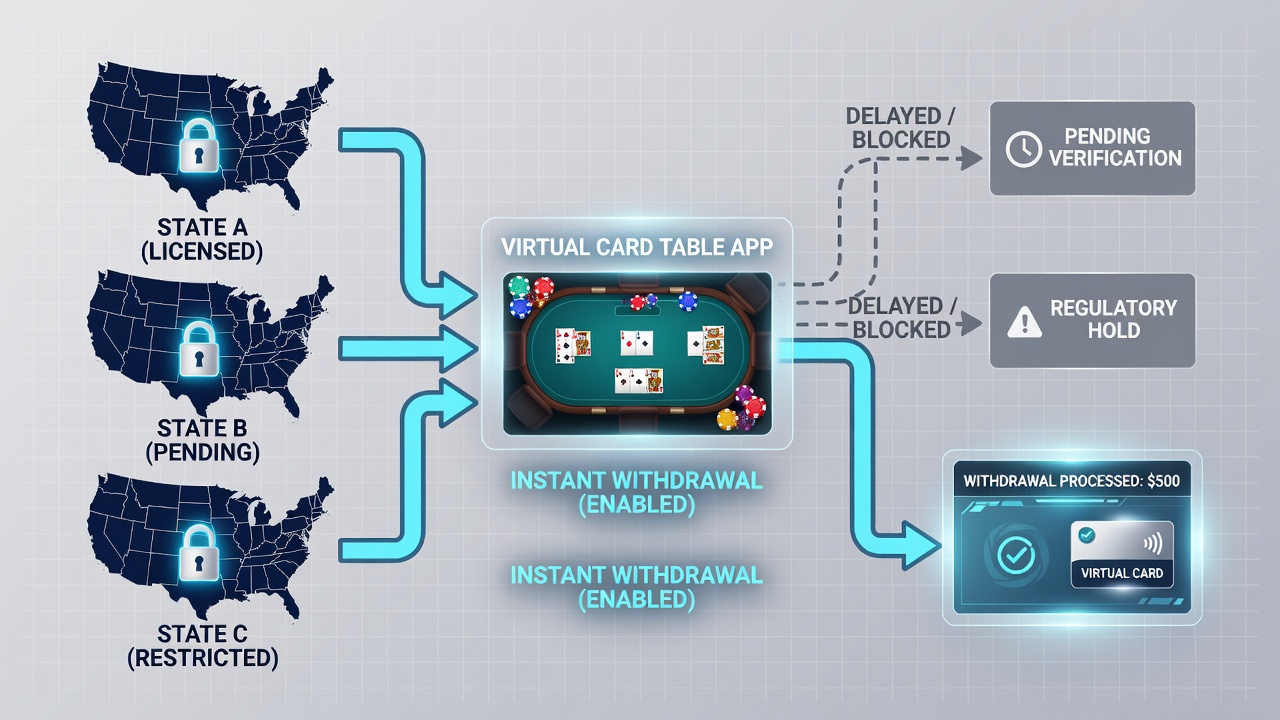
Figures reveal that platforms licensed in states permitting broader payment flexibility achieve faster average completion rates for cross-border requests, while those bound by narrower rules show consistent gaps between advertised instant times and actual fund arrival. Operators adapt by routing international withdrawals through channels pre-approved under the strictest license held, which maintains compliance but reduces the speed advantage that some users expect.
International User Access Patterns
Global players access these apps through geo-restricted servers and encounter withdrawal pathways shaped by the primary licensing state rather than their home country regulations. When users from regions with lighter oversight attempt withdrawals, the app enforces the more demanding state-level checks first, creating a layered process that combines both jurisdictions' standards. Observers note this hybrid approach helps platforms avoid penalties but produces variable experiences depending on the license origin.
Studies from industry reports highlight that apps holding licenses in multiple states often segment user accounts by license type, allowing different withdrawal queues that international players can navigate once they understand the underlying structure. Data collected through September 2026 indicates that users who select platforms with licenses from states offering streamlined international payment corridors complete transactions more reliably within promised timeframes.
Compliance Overlaps and Technology Adaptations
Operators deploy automated systems that cross-reference license-specific rules against each withdrawal request, and these systems flag international transactions for extra scrutiny when multiple state requirements overlap. The result is a dynamic approval process where instant options remain available only for requests that satisfy every active license condition simultaneously. Platforms update these systems regularly to reflect new regulatory guidance issued by individual state authorities.
According to records maintained by the New Jersey Division of Gaming Enforcement, licensed operators must maintain audit trails that cover all international withdrawals, which adds documentation steps that influence overall velocity. Similar requirements appear in other jurisdictions, prompting developers to build modular compliance modules that adjust processing speed based on detected license constraints.
Conclusion
Multi-state licensing variations establish the boundaries within which virtual card table apps deliver instant withdrawal options to international users, with each license adding distinct verification and payment rules that operators must reconcile. Platforms balance these requirements by implementing unified systems that prioritize compliance, resulting in withdrawal experiences that reflect the cumulative regulatory load rather than a single standard. International users navigate these conditions by selecting apps whose primary licenses align with faster cross-border processing pathways, while operators continue refining technology to minimize delays across all active jurisdictions.